Photo-led cap feeding, bowl feeding and cap presentation systems for UK capping lines01494 623015   sales@lancinguk.com
Closure feeding systems

Closure feeders for caps, pumps, triggers and sprayers.

Feeder systems for closures that need more than a simple screw-cap chute, including pumps, sprayers, trigger heads and specialist bottle closures.

Need the feeder to match your cap and capper?

Send cap samples, photos, target output and the downstream capping machine details. The quickest shortlist starts with real parts, not a generic speed figure.

Send cap details
Specification focus

Special closures need special handling.

Closure feeders cover the awkward part of capping automation: closures that are not simple round screw caps. Pumps, triggers, sprayers, droppers, flip-tops and specialist caps often need sample-led orientation, tube control and careful presentation.

The aim is to control the closure before it reaches the bottle. Without the right feeding route, the capper may receive caps at the wrong angle, tubes may catch, heads may point the wrong way or operators may need to intervene too often.

A strong enquiry includes samples, photos, closure dimensions, tube length, required head direction, bottle details and target output.

Asymmetric shape controlThe feeder must account for offset heads, dip tubes, long nozzles and non-round geometry.
Bottle stabilityTall pumps and triggers may require extra bottle support during placement and tightening.
Changeover planningMulti-SKU lines need realistic change parts and setup expectations.
Selection table

Information that changes the feeder design.

DetailWhy it mattersWhat to send
Closure geometryControls whether caps can be separated, sorted and held in a stable orientation.Photos, samples, diameter, height, skirt depth, material and any liner details.
Required presentationThe same cap may need different exit orientation depending on the capping head.Correct orientation, chute angle, pick point, capper type and discharge height.
Target outputThe feeder must exceed realistic production speed without flooding the track.Caps per minute, bottles per hour, planned shifts and expected efficiency.
Changeover rangeMultiple closures can require adjustable tooling or dedicated change parts.All cap sizes, SKU frequency and whether quick changeover is important.
Related systems

Move into the nearest feeder route.

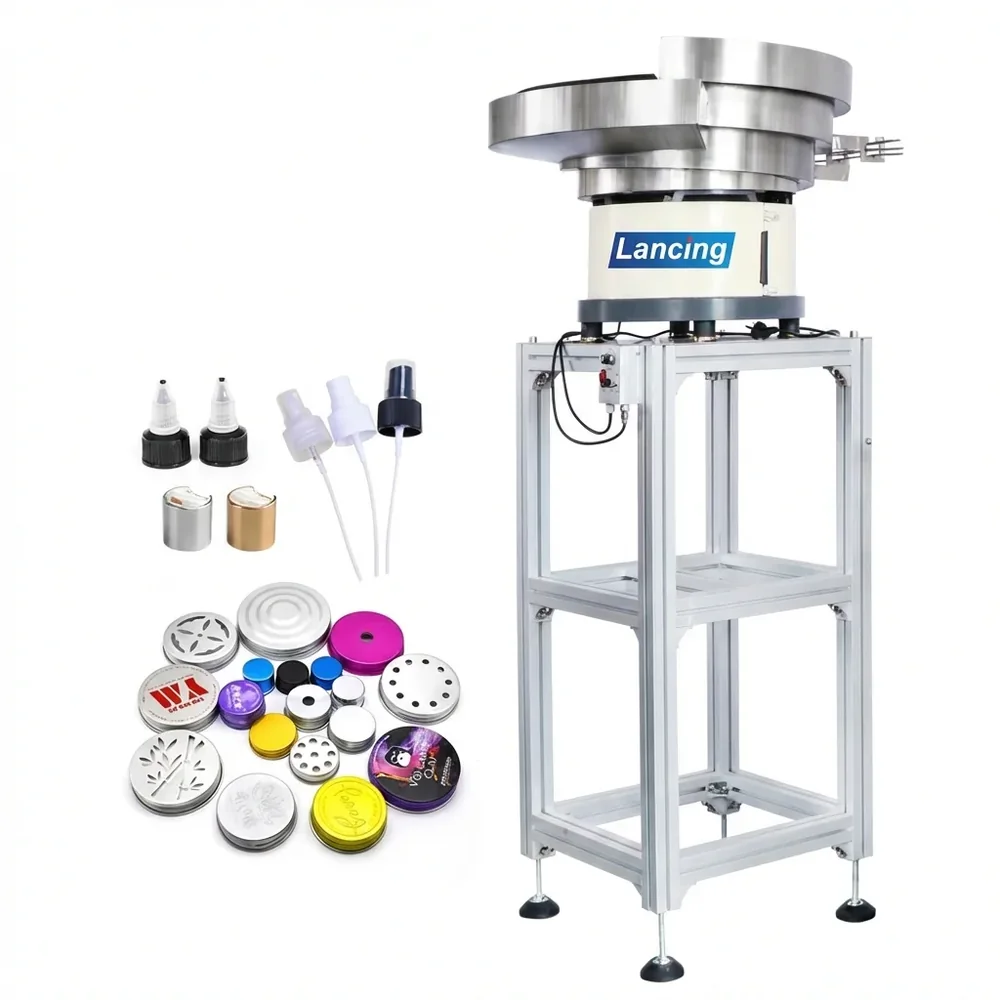
Cap feeder with closure samples
Cap feeders

Automatic cap feeders

Controlled cap supply for automatic and semi-automatic cappers.

Read more
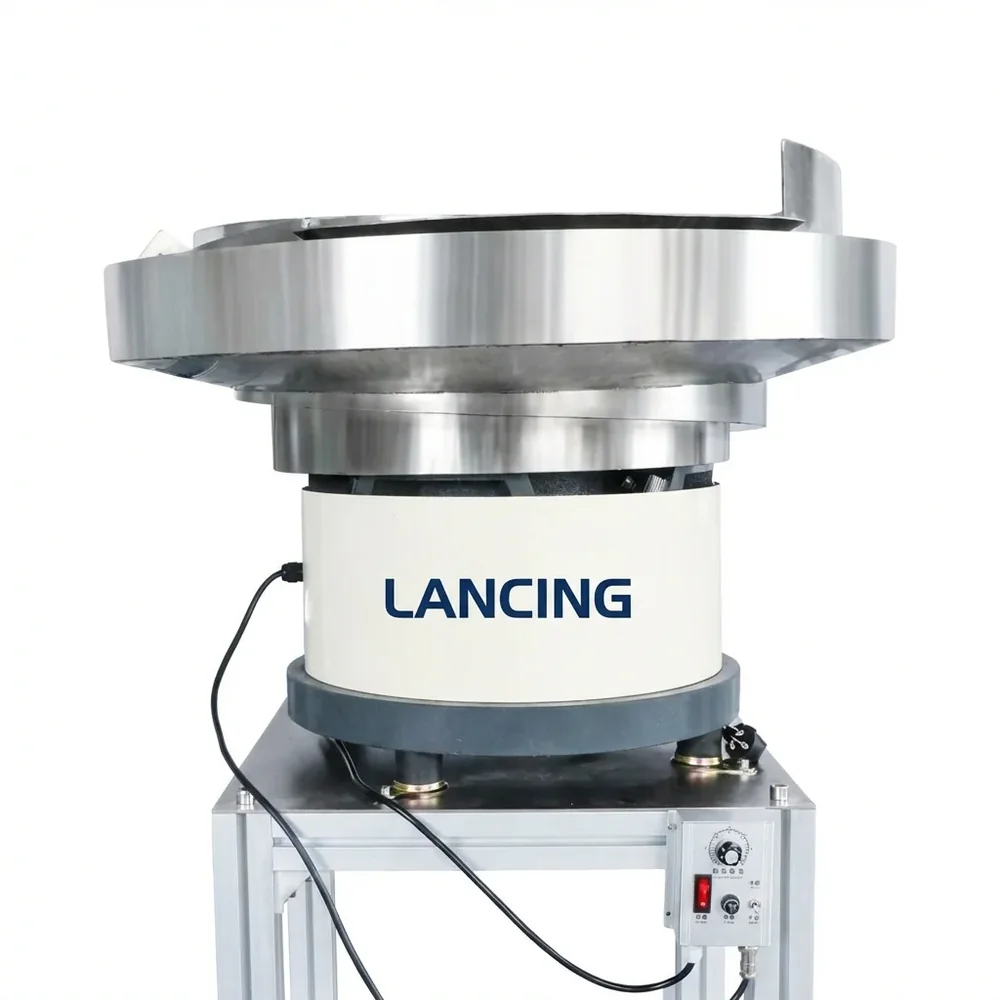
Vibratory bowl feeder close up
Bowl feeders

Vibratory bowl feeders

Bowl tooling and track design for sorting and orientation.

Read more
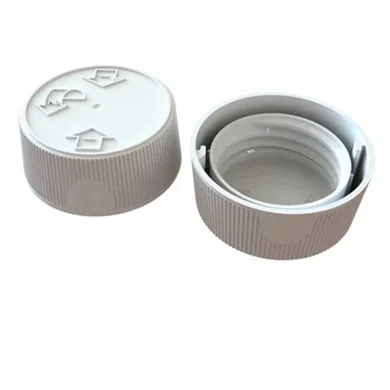
Plastic screw cap samples
Sorters

Cap sorters

Wrong-way rejection and closure presentation before capping.

Read more
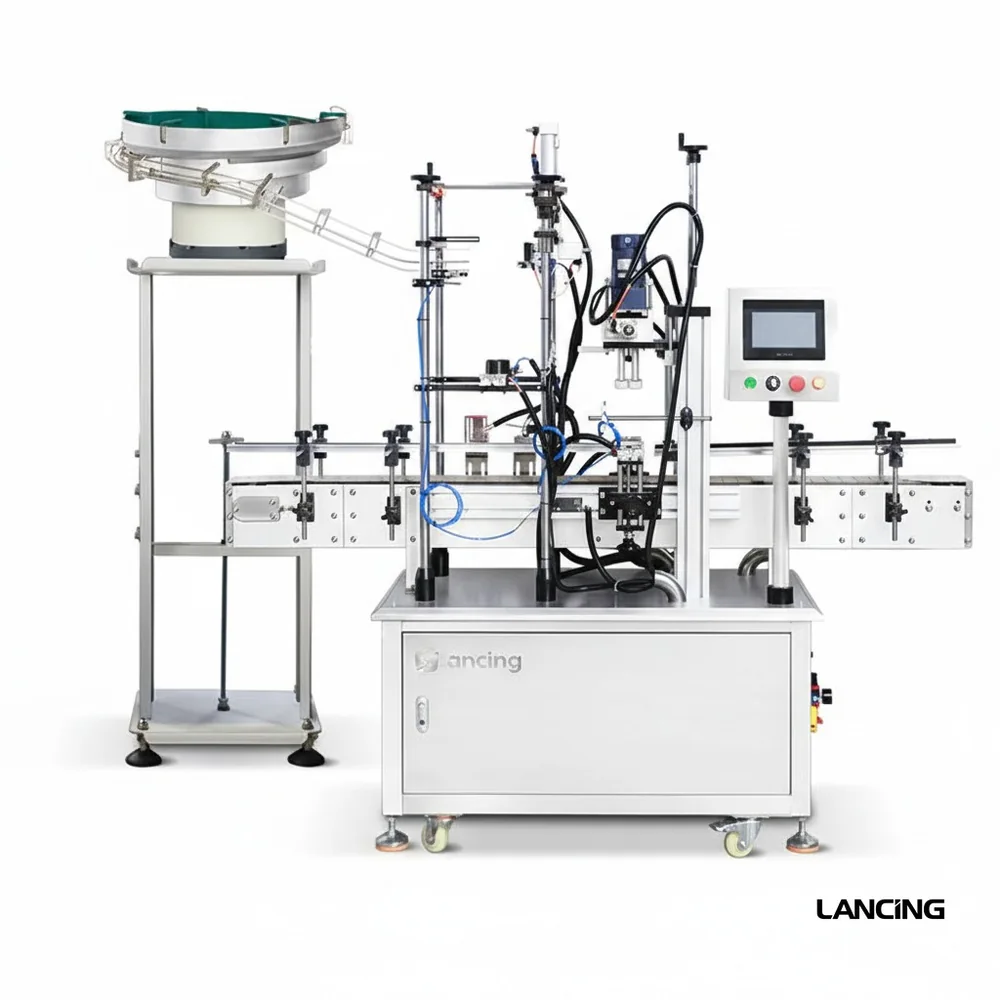
Pump capping machine with bowl feeder
Special closures

Pump and trigger feeding

Feeding support for pumps, sprayers and difficult closures.

Read more
Connected Lancing routes

Built to sit beside the wider Lancing machinery network.

The site now links cap feeding intent to bowl feeder specification, capping machine selection and wider bottle-line planning.

Bowl feeding

Vibratory bowl feeder specification

Use the bowl feeder route when the cap or component needs sample-based tooling, orientation and a stable discharge point.

Visit bowlfeeders.co.uk
Capping

Capper selection and closure type

Use the capping machinery route when the project also needs screw, pump, trigger, ROPP, press-on or complete capping equipment.

Visit cappingmachinesuk.co.uk
Line planning

Filling, capping and labelling context

Use the Lancing UK route when the feeder is part of a wider packaging line, retrofit, installation or project-planning brief.

Visit lancinguk.online
FAQs

Questions about closure feeders.

Why are pumps and triggers harder to feed?

They are taller, offset, less symmetrical and often have dip tubes or nozzles that can tangle or alter the centre of gravity.

Can one feeder handle caps and pumps?

Sometimes, but different closure families often need different tooling or change parts.

What industries use closure feeders?

Cosmetics, personal care, household cleaning, chemicals, beverages and contract packing commonly use automatic closure feeding.

Engineering SEO detail

Closure feeders must deal with awkward shapes before the cap reaches the bottle.

Closures such as pumps, triggers, sprayers, droppers and flip tops can tangle, point the wrong way, drag dip tubes or mark decorative heads. This page now adds the compatibility checks that separate closure feeding from simple screw-cap supply.

Dip tubes

Control tube length and tangling

Dip tubes can cross, drag or catch in tracks, so tube length and flexibility should be checked with the bottle/cap combination.

Pump and trigger feeders
Surface finish

Protect visible closure faces

Gloss, metallic, printed and soft-touch closures need scuffing checks using finished caps, not only development samples.

Gentle handling
Orientation

Use the head shape correctly

Offset heads, nozzles and trigger handles can require specific orientation before the capper accepts the closure.

Closure orientation
Specification evidence

Information Lancing should check before final feeder selection.

These checks improve quotation quality without assuming unsupported speeds, capacities or format ranges.

CheckWhy it mattersUseful evidence to send
Closure dimensionsAwkward closures need more than diameter and height.Head width, tube length, trigger angle, nozzle direction, cap thread and total assembled length.
Decorative surfaceHandling marks may be unacceptable on retail-facing closures.Finished production samples, presentation requirements and acceptable contact areas.
Bottle/cap pairingA closure can feed successfully but still fail at placement if the bottle is unstable.Bottle samples, closure samples and information on whether bottles are full during capping.
Changeover rangeMultiple pumps or triggers can require different guides or tooling.All intended closure variants and expected SKU change frequency.
Buyer questions

Practical questions before ordering a cap feeding system.

Why are pumps and triggers harder to feed?

They are asymmetric and may include tubes or heads that catch, tangle or require a specific direction at handover.

Can a closure feeder handle decorative caps?

Possibly, but the surface finish and acceptable contact points should be tested with finished production caps.

What evidence helps quote a closure feeder?

Send closure samples, bottle samples, tube length, photos, drawings, required orientation and capper details.

Is a bowl feeder always used for closures?

Not always. Some closures may need an elevator, manual presentation, custom track, placement route or a capper-specific solution.

How can I avoid cross-domain confusion?

This site owns cap and closure feeding into capping lines; broader capping-machine selection should sit on the capping machinery domain.

CallQuote