Photo-led cap feeding, bowl feeding and cap presentation systems for UK capping lines01494 623015   sales@lancinguk.com
Troubleshooting

Cap feeder troubleshooting for misfeeds and jams.

Use symptoms at the bowl, chute, sorter and capper handover point to identify where the cap feeding route needs attention.

Need the feeder to match your cap and capper?

Send cap samples, photos, target output and the downstream capping machine details. The quickest shortlist starts with real parts, not a generic speed figure.

Send cap details
Specification focus

A cap feeder problem often starts before the jam point.

Cap feeder faults usually appear at the capping head, but the root cause may be earlier in the route. A cap can be unstable in the hopper, fail to separate in the bowl, bounce in the chute or arrive at the handover point at the wrong time.

Troubleshooting should start by identifying the symptom: starvation, flooding, wrong orientation, caps wedged in the track, caps bouncing out of guides or inconsistent pickup by the capper. Each symptom points to different mechanical or control checks.

If the problem appears after a cap, bottle or speed change, review the changeover settings and whether the feeder was originally tooled for the new closure.

StarvationCheck hopper level, bowl tuning, cap flow, sensors and the feed-rate margin above line speed.
OverfeedingCheck level control, chute capacity and whether caps are being pushed into the capper faster than it can accept.
Wrong orientationCheck reject tooling, cap balance, worn guides and whether the closure has changed.
Handover faultsCheck chute angle, capper timing, bottle stability and cap pickup position.
SymptomLikely area to checkUseful evidence
Caps bridge in hopperHopper angle, cap surface, bulk loading depth and vibration transfer.Video of cap movement and photos of the cap pile.
Bowl runs but capper starvesTrack speed, reject rate, outlet restriction, sensor settings and line demand.Caps per minute leaving the bowl compared with capper demand.
Inverted caps reach the capperReject gate, cap geometry, tooling wear and excessive bowl speed.Photos of the cap in correct and wrong orientation.
Caps jam in chuteChute width, angle, cap bounce, static, cap damage or mismatched cap size.Close-up photos of jam location and cap dimensions.
Related systems

Move into the nearest feeder route.

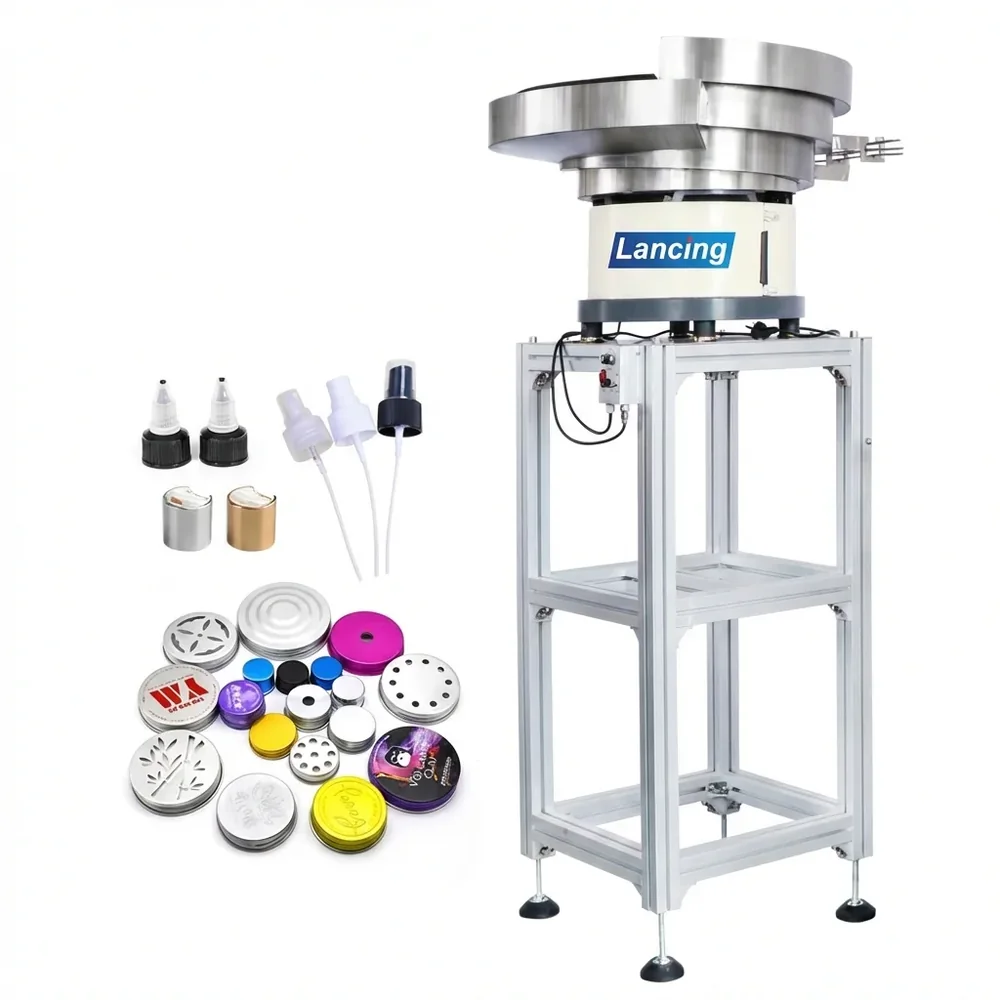
Cap feeder with closure samples
Cap feeders

Automatic cap feeders

Controlled cap supply for automatic and semi-automatic cappers.

Read more
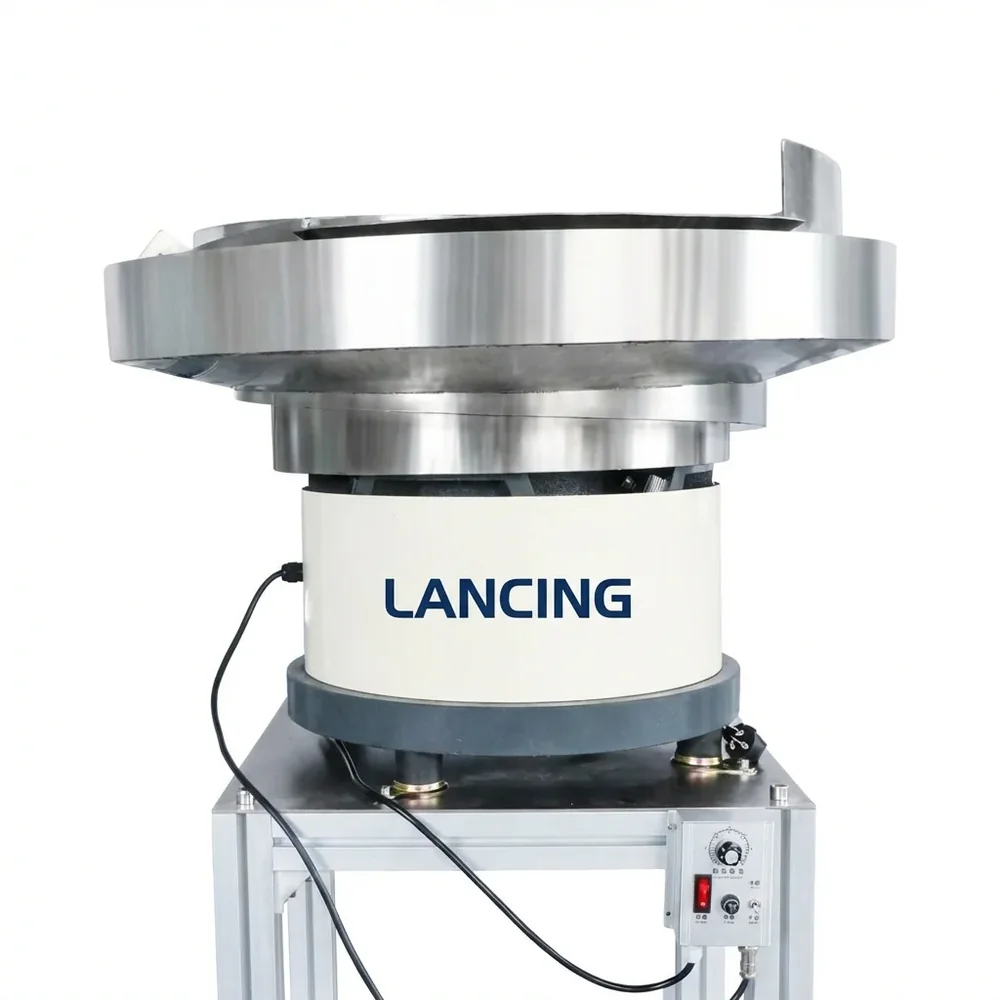
Vibratory bowl feeder close up
Bowl feeders

Vibratory bowl feeders

Bowl tooling and track design for sorting and orientation.

Read more
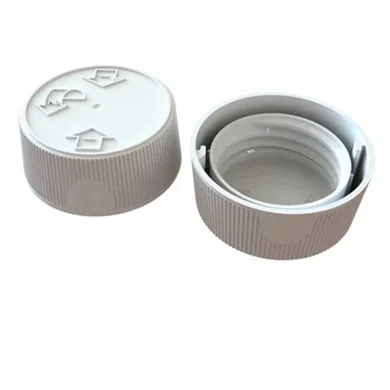
Plastic screw cap samples
Sorters

Cap sorters

Wrong-way rejection and closure presentation before capping.

Read more
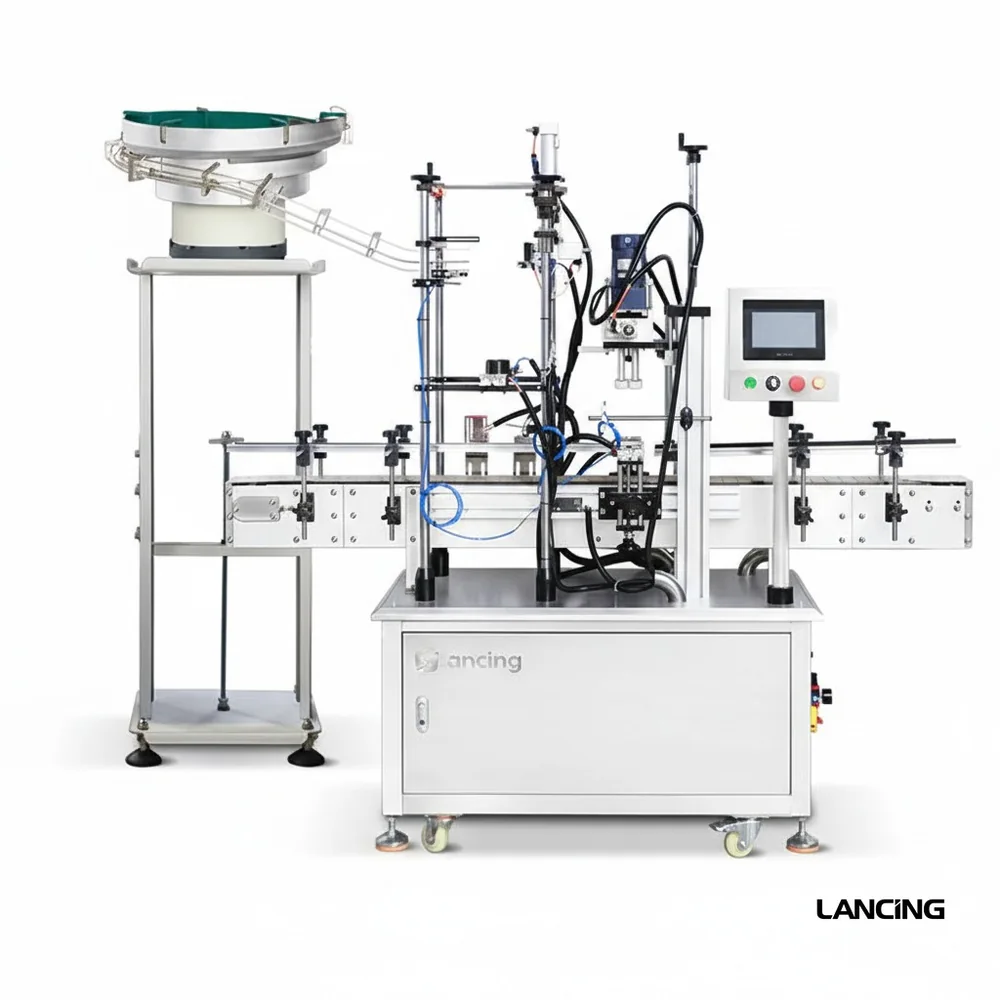
Pump capping machine with bowl feeder
Special closures

Pump and trigger feeding

Feeding support for pumps, sprayers and difficult closures.

Read more
Connected Lancing routes

Built to sit beside the wider Lancing machinery network.

The site now links cap feeding intent to bowl feeder specification, capping machine selection and wider bottle-line planning.

Bowl feeding

Vibratory bowl feeder specification

Use the bowl feeder route when the cap or component needs sample-based tooling, orientation and a stable discharge point.

Visit bowlfeeders.co.uk
Capping

Capper selection and closure type

Use the capping machinery route when the project also needs screw, pump, trigger, ROPP, press-on or complete capping equipment.

Visit cappingmachinesuk.co.uk
Line planning

Filling, capping and labelling context

Use the Lancing UK route when the feeder is part of a wider packaging line, retrofit, installation or project-planning brief.

Visit lancinguk.online
FAQs

Questions about troubleshooting.

Why does my cap feeder keep jamming?

Common causes include inconsistent caps, poor separation, incorrect tooling, overfeeding, worn guides, chute angle problems or timing issues at the capper.

Why is the capper starving for caps?

The feeder may be undersized, the bowl may be tuned incorrectly, the hopper may run low, or sensors may be stopping the feed too early.

Why are caps arriving upside down?

The orientation tooling, reject path or cap geometry may not be suitable for the current cap style or speed.

CallQuote