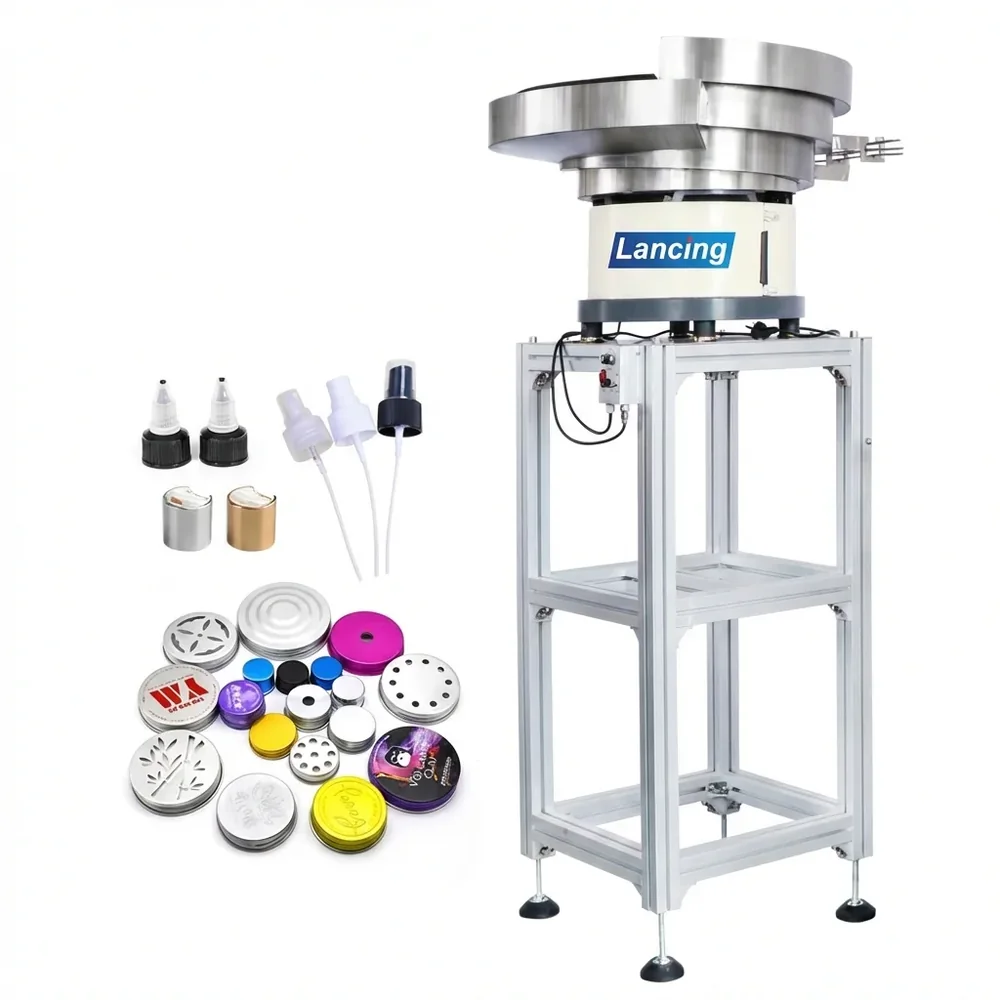
Automatic
Automatic cap feeders
Bulk cap storage, controlled sorting, level sensing and cap delivery for automatic capping machines.
Automatic cap feedersCap feeders, bowl feeders, sorters and elevators specified around real caps, bottles and existing capping machines.
Send cap samples, photos, target output and the downstream capping machine details. The quickest shortlist starts with real parts, not a generic speed figure.
The most reliable route depends on cap geometry, orientation, discharge height, output target, changeover pattern and the way the downstream capper accepts the closure.
Bulk cap storage, controlled sorting, level sensing and cap delivery for automatic capping machines.
Automatic cap feeders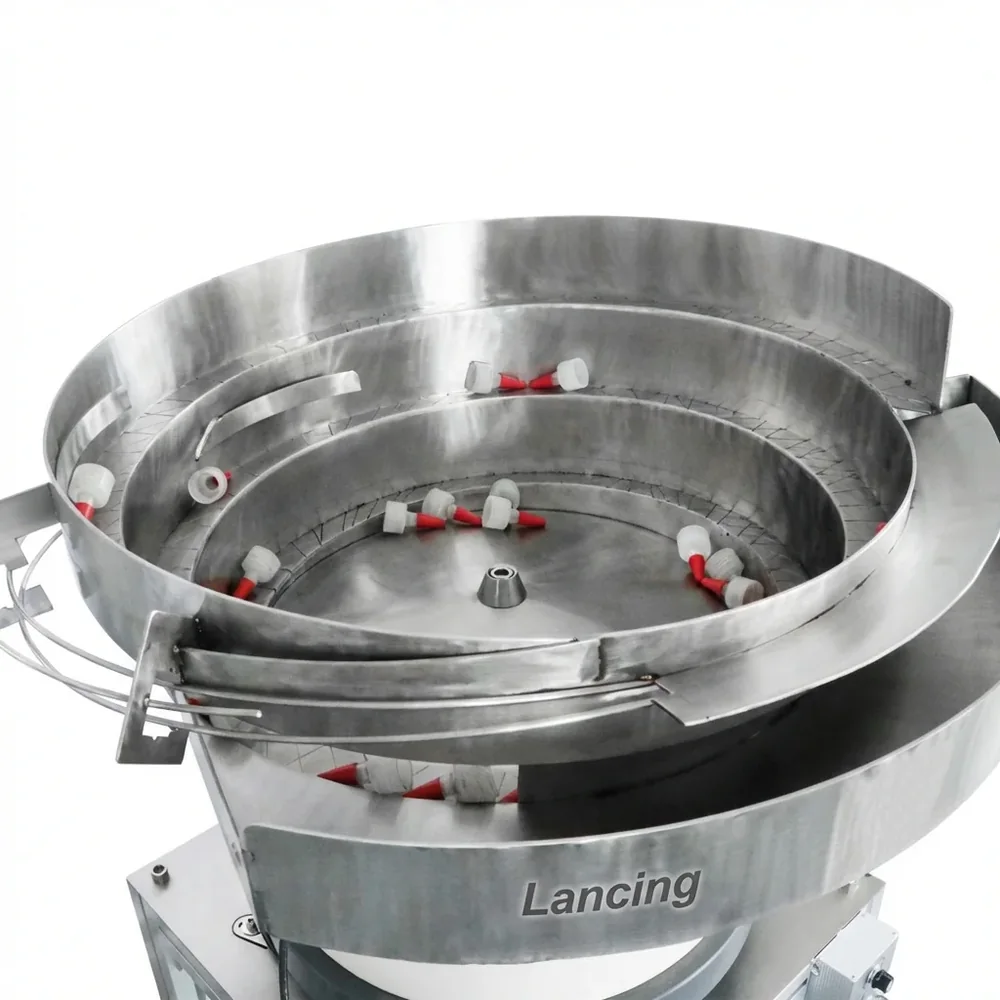
Custom bowl tooling to sort, orient and feed caps, closures and production parts into a fixed pick point.
Vibratory bowl feeders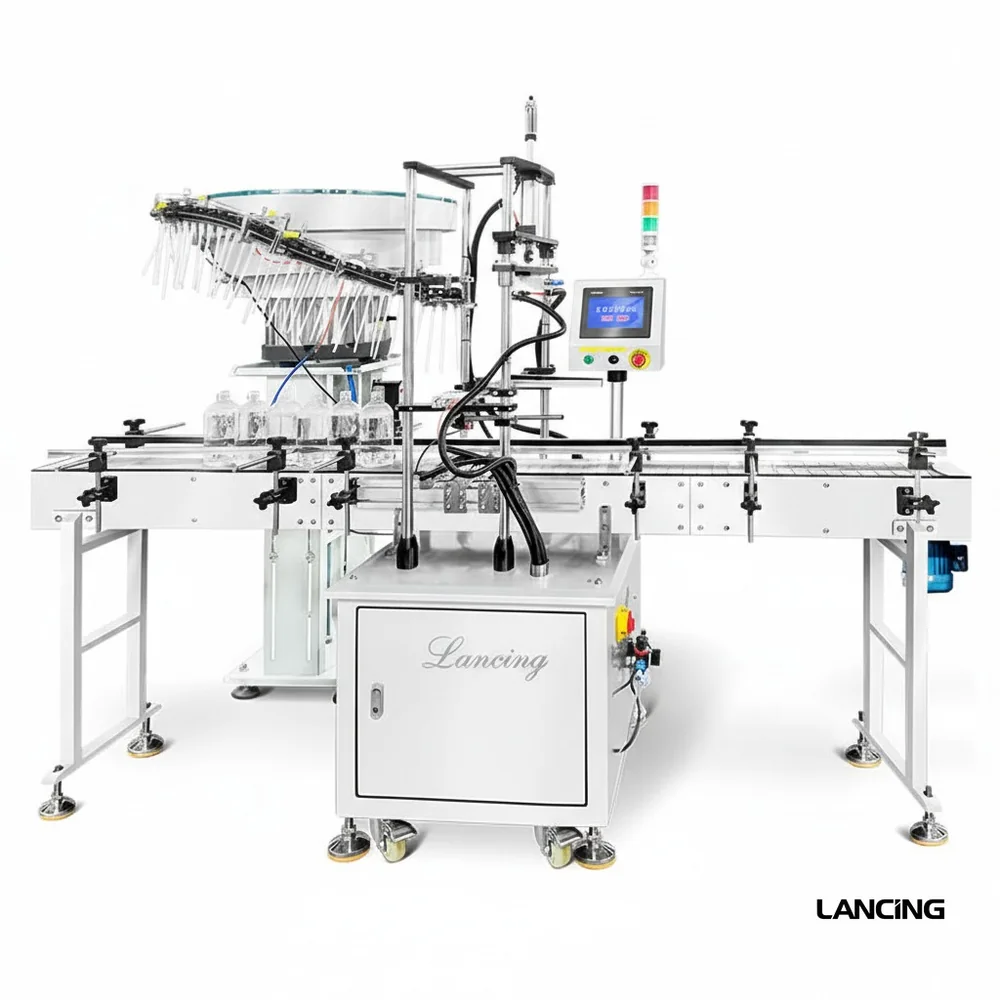
Link the feeder, capper, conveyor and sensors so the line runs without starving or overfilling the cap track.
Cap feeder integration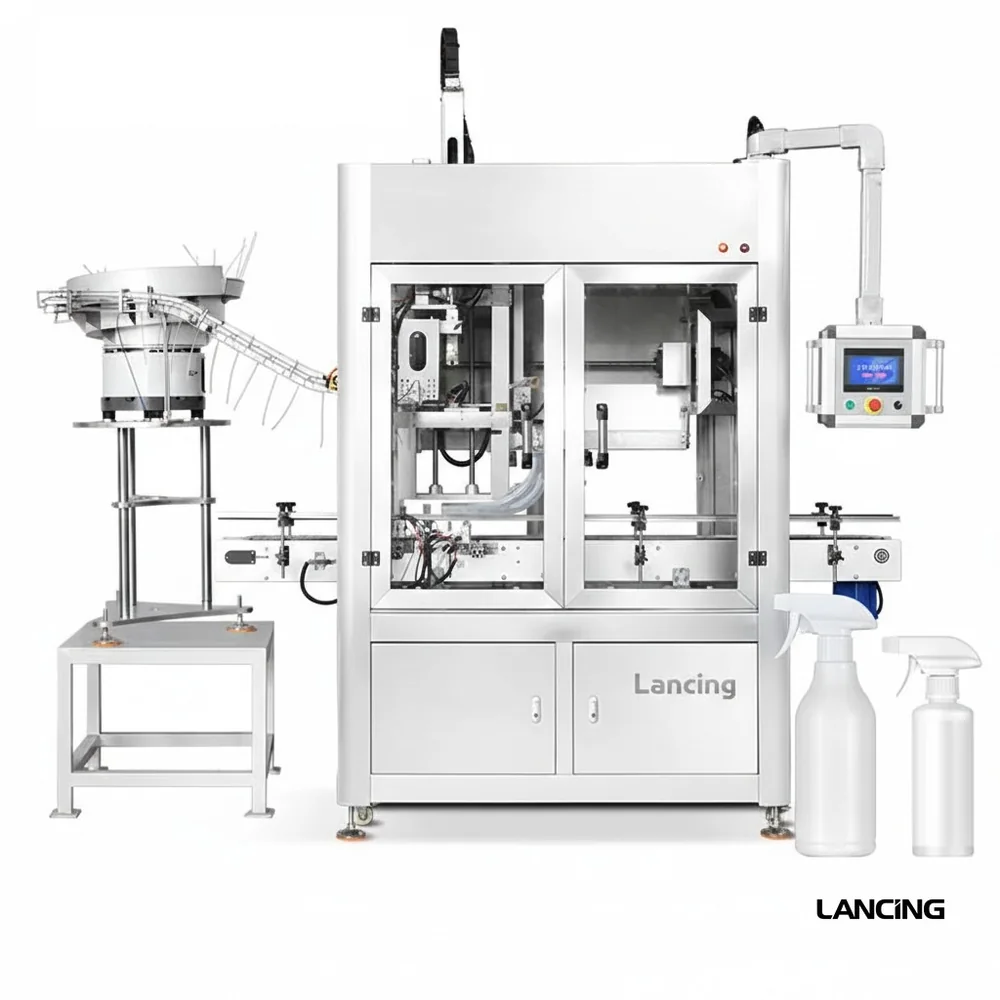
Caps, pumps and triggers behave differently in bulk. A good specification checks whether the closure can be separated, orientated, transferred and presented without creating jams, scuffs or inconsistent pick-up.
Use these routes when the closure problem is known but the most suitable feeder method has not yet been selected.
Final specification is always sample-led, but this comparison helps shortlist the first route.
| Feeder route | Where it helps | Key checks |
|---|---|---|
| Vibratory bowl feeder | Caps or closures that need sorting and orientation before a chute or pick point. | Part geometry, reject tooling, noise, bowl size, discharge height and changeover. |
| Cap elevator and hopper | Bulk cap storage where operators need to load less often and keep the capper supplied. | Cap size range, elevator angle, hopper capacity, level control and guarding. |
| Cap sorter / orientator | Higher-speed or orientation-sensitive closures before inline or rotary capping. | Correct-face detection, wrong-way rejection, feed stability and capper interface. |
| Special closure feeder | Pumps, triggers, droppers, sprayers, tubes and asymmetric closures. | Tangling risk, tube control, head orientation, bottle support and placement method. |
Use the related routes below for bowl tooling, capper selection and wider bottle-line planning.
Use the bowl feeder route when the cap or component needs sample-based tooling, orientation and a stable discharge point.
Visit bowlfeeders.co.ukUse the capping machinery route when the project also needs screw, pump, trigger, ROPP, press-on or complete capping equipment.
Visit cappingmachinesuk.co.ukUse the Lancing UK route when the feeder is part of a wider packaging line, retrofit, installation or project-planning brief.
Visit lancinguk.onlineSend cap samples or clear photos, dimensions, material, required exit orientation, target caps per minute, capper type, discharge height and available footprint.
Often yes, provided the capper has a suitable handover point, space for guarding and a way to accept level or start-stop signals.
No. A bowl feeder is useful for orientation, but some closures suit a hopper, elevator, sorter, chute or custom presentation route better.
Reliable feeder selection starts with real closures, a defined capper handover and a testable specification. The guidance below keeps the decision focused on caps, lids, pumps and triggers while directing full capping-machine selection to the wider Lancing machinery network.
Diameter, height, skirt depth, thread form, ribs, liner, tamper band and centre of gravity all affect whether a cap can be separated, oriented and delivered reliably.
Read specification checksPhysical cap samples remain the safest way to assess scuffing risk, orientation features, bridging, nesting, and whether a bowl, elevator or sorter is the right route.
See sample guidanceThe feeder outlet has to suit the capping machine, including chute angle, handover height, cap-in-chute control, reject handling, guarding and start-stop signals.
Plan integrationThese checks improve quotation quality without assuming unsupported speeds, capacities or format ranges.
| Check | Why it matters | Useful evidence to send |
|---|---|---|
| Closure compatibility | Confirms whether the closure can be separated and held in the required orientation. | Cap samples, drawing, measured diameter/height, skirt depth, material and required exit orientation. |
| Bottle and cap combination | The feeder can only be confirmed properly when the handover method matches the bottle neck, capper and closure. | Filled or empty bottles, caps, neck finish details, capper type and photos of the current line. |
| Throughput and buffer | Throughput should be matched to real production demand and not guessed from a generic feeder rating. | Target bottles per minute or hour, shift pattern, acceptable stoppage level and operator refill plan. |
| Controls and recovery | Sensors and jam handling decide whether the feeder supports the line or becomes the bottleneck. | Required stop/start signals, cap-low warning preference, cap-in-chute requirement and available PLC interface. |
The feeder and capper should be specified together. The capper determines the handover point and the feeder determines how reliably caps arrive at that point.
Sometimes, but the useful answer depends on the geometry difference, orientation requirement and whether change parts or adjustments are acceptable.
Samples reveal behaviour that photos do not show, including nesting, scuffing, bridging, centre of gravity and how the cap reacts on a track or chute.
No. A sensible output target can be discussed early, but confirmed throughput depends on the cap, feeder route, handover and downstream capping behaviour.
Use the capping machinery route when the project also includes torque, tightening method, capper style, conveyor control or complete line selection.
A cap feeder should be shortlisted from the way the closure behaves in bulk, the way the capper accepts it, and the way operators will refill and recover the line. These checks keep the project centred on closure feeding rather than a generic machinery description.
Caps that bridge, nest, overlap, bounce or scuff need a different route from caps that naturally separate. Production samples help confirm whether a bowl, elevator, sorter, chute or presenter is most suitable.
Cap sample guidanceThe refill method, hopper access, cap-low warning and target stoppage level affect line behaviour as much as the nominal feed rate. Lancing should understand how often operators can safely replenish caps.
Output and buffer checksCap-in-chute sensors, low-level warnings, jam detection and start-stop signals help avoid starving the capper or overfilling the track. These should be discussed with the capper and line control route.
Jam detection routeCap Feeders UK is focused on caps, lids, pumps, triggers and closure presentation. The wider Lancing sites remain the better route for complete capping-machine selection, general bowl feeder tooling and full packaging-line projects.
| Search need | Best route | Why |
|---|---|---|
| Cap feeding, cap orientation, cap buffer and capper handover | Cap Feeders UK | This range covers the closure-feeding part of the capping line. |
| General vibratory bowl tooling for parts beyond caps | Bowl Feeders UK | The specialist bowl feeder site covers wider component feeding and bowl tooling. |
| Screw, pump, trigger, ROPP or torque-based capping machinery | Capping Machines UK | The capper site covers tightening, placement and machine selection. |
| Filling, capping, labelling and complete line integration | Lancing UK | The main Lancing route covers wider packaging automation and line planning. |
The capper applies or tightens the closure, while the feeder has to separate, orientate and deliver it consistently. A good capping machine can still be held back by poor cap presentation.
Production cap samples, a bottle and cap combination, target output, capper handover details, available space and any preferred refill or warning method give the strongest starting point.
Sometimes, but this depends on geometry, orientation features, acceptable change parts and the difference between current and future closures. It should be checked before the system is specified.
The strongest enquiry follows a clear route: compare the sorting method, prove the real cap, define the capper interface, agree safe access and record acceptance criteria.
Compare bowls, elevators, sorters, special presenters and assisted feeding around closure behaviour and the required outlet.
Provide caps, bottles, drawings, target output, format range, finish requirements and known problem samples.
Agree chute, sensors, controls, guarding, operator refill, line clearance and the exact capper handover.
Use planned FAT and SAT checks for normal flow, stops, faults, changeover, recovery and first-off production.
| Evidence | What it helps confirm | Common omission |
|---|---|---|
| Production caps and bottles | Separation, orientation, finish, bottle stability and capper handover. | Sending only a diameter or a marketing photograph. |
| Normal and peak line demand | Sustainable feeder output, buffer, refill and downstream queue control. | Quoting only the capper's maximum nameplate speed. |
| All planned formats | Change parts, adjustable tooling, line clearance and future scope. | Assessing one cap then adding different closures after design. |
| Layout and site constraints | Hopper loading, discharge height, guarding, access and service space. | Fixing the feeder position before the handover route is agreed. |
| Acceptance expectations | FAT/SAT scope, test samples, fault scenarios and handover records. | Leaving success criteria until the equipment is complete. |
These answers define the evidence and system boundaries that matter before a feeder type, sorter or handover method is selected.
A cap is a credible automatic-feeding candidate when it can be separated from bulk, given a repeatable orientation, moved without unacceptable damage and presented in the condition the capper needs. Diameter alone cannot confirm this; the assessment should use representative production caps, the required outlet orientation and the real capper interface.
Useful early evidence includes dimensions, material, surface finish, liners or tamper features, photos of the cap in every relevant view and examples of normal batch variation. A physical sample trial remains the strongest way to reveal nesting, bridging, scuffing and unstable transfer.
See the sample-led specification routeThe cap feeder and capping machine should be specified as one connected handling route, even when they are purchased separately. The capper defines how and where the closure must arrive; the feeder defines how loose caps are separated, oriented, buffered and delivered to that point.
On a new line, freeze the handover height, cap attitude, bottle support, queue condition and control signals early. On a retrofit, document the existing capper inlet before selecting feeder hardware so the new equipment is not forced around an unsuitable final transfer.
Read the feeder-to-capper handover guideA workable concept is tied to production closures, the required presentation, normal and peak line demand, the downstream machine and an agreed test route. A catalogue description can identify possible technologies, but it cannot prove that a particular cap will separate, orientate, transfer and recover reliably.
Send normal caps as well as known difficult examples, bottle and cap combinations, drawings where available, line photos, the current or proposed capper, space constraints and the operator refill plan. This evidence allows the quotation to state what still requires trial confirmation.
Prepare the engineering enquiry packManual or assisted cap placement can remain the better route for short or infrequent runs, very frequent closure changes, low output demand or an awkward closure that has not yet been proven for reliable automatic presentation. The decision should compare operator workload, repeatability, ergonomics, reject risk and the likely future production pattern.
Automation is most useful when it removes a real constraint rather than adding complexity to a flexible small-batch process. A staged route can preserve manual placement now while defining the space and capper interface needed for later feeding automation.
Compare manual, assisted and automatic feedingThe fastest useful shortlist comes from evidence about the cap, bottle, capper and line controls rather than from a generic machine name.
Use a user requirement specification to define the required cap outlet condition, capper handover, changeover range, refill method, controls and acceptance route.
Build the URS checklistRepresentative caps, bottles and known difficult samples help prove whether a bowl, sorter, elevator, chute or special presentation route is credible before build.
Plan the feeder trialCap-low signals, chute level sensing, line stop behaviour and fault recovery should be agreed before the mechanical route is finalised.
Review controls and I/OCompare the complete cap feeding route: bulk loading, separation, sorting, orientation and handover to the capper. Use the checks below to define samples, changeover and acceptance requirements before requesting a quotation.
Crown caps need controlled orientation and careful transfer because the open skirt, liner and beverage-cap geometry behave differently from many plastic screw caps. The feeder route should be chosen from real closures and the receiving capper, not from diameter alone.
Confirm whether the project needs a bowl, elevator, sorter or dedicated crown-cap presentation route, then test the outlet orientation required by the capper.
Review crown cap feeder checksStatic can make lightweight plastic caps cling, bridge, double up or behave inconsistently in a track. It is most likely to matter with light closures, dry environments, high-speed handling, plastic contact surfaces and caps with large surface areas.
A useful enquiry should identify the cap material, finish, normal storage conditions and any history of cling, dust attraction or intermittent track starvation.
Check anti-static feeding guidanceCaps that sit inside each other, overlap like shingles or travel doubled can defeat a simple feed path. The handling route needs to separate them before orientation and prove that rejects do not simply return to the same fault condition.
This is especially important for shallow caps, thin-walled closures, flip-top styles and caps with features that catch or interlock.
Solve nesting and shingling risksSimple sensors often confirm cap presence or queue level, while vision or enhanced verification can help where orientation, colour, cap type, liner condition or decorative face matters before the capper receives the closure.
Inspection should be specified around a decision: stop the line, reject a cap, alert an operator or record a condition for quality review.
Plan cap verificationDefine the closure orientation and delivery point required by the capper, then provide caps from representative batches. Review the hopper, orientation stage, chute and buffer together. Test replenishment, blocked demand and damaged caps, and confirm how the feeder responds when the capping machine stops or changes format.
Related guidance:
A cap feeder project begins with a clear definition of what the receiving machine needs. Mark the cap position, open-side direction, height and orientation at the handover. State whether the capper collects one closure from a fixed point or takes closures from a track. That interface should appear in the proposal alongside the hopper and sorter.
Use production closures from the intended supply chain. Label samples by supplier and revision, and include unusual features such as hinges, liners, long tubes or decorated surfaces in the discussion. If the closure has recently changed, retain examples of both versions so a proposed feeder is not assessed against an obsolete part.
Production output also depends on the events between continuous running periods. Ask for a trial that includes replenishment, a pause from the receiving capper and a restart under the agreed operating procedure. Record acceptable closures delivered, recirculation, rejects and any operator intervention. The requested result should describe the feed system as it will be used, not only the sorting mechanism in isolation.
Provide the actual receiving point and its operating sequence, supported by drawings or photographs and the capper details. A nominal output target alone does not define the handover that the feeder must satisfy.