Photo-led cap feeding, bowl feeding and cap presentation systems for UK capping lines01494 623015   sales@lancinguk.com
Reject handling

Cap rejection and recirculation before capping.

Decide how wrong-way, doubled, unstable or damaged caps leave the sorting path and what may safely return.

Build the decision around real caps and the real capping line.

Send representative closures, bottle and cap information, required orientation, target output and capper handover details so Lancing can assess a suitable route.

Send project details
Sorting boundary

A reject system should remove the fault without creating a new one.

Cap sorters and bowl feeders often use tooling, geometry, air or sensors to keep correctly orientated caps on the delivery path and remove caps that are wrong-way, doubled or unstable. The rejected closure then needs a deliberate destination. It may return to a hopper, enter a separate collection container or be held for inspection, depending on why it was rejected and whether recirculation could damage or contaminate it.

Repeated rejects are also useful information. A rising reject rate can indicate unsuitable cap variation, damaged closures, an incorrect setting, overfilled bulk storage, a worn guide, a dirty sensor or unstable feed into the sorter. The control strategy should distinguish an occasional normal reject from a condition that needs the feeder to stop and call an operator.
Define every reject reasonWrong orientation, double caps, deformation and foreign material should not automatically share the same route.
Protect cap qualityRepeated falls or recirculation can mark decorated or lightweight closures.
Use reject trendsA sustained increase should trigger inspection rather than being hidden by endless recirculation.
Decision table

Match the reject action to the observed cap condition.

The final route must be agreed for the actual closure, process and quality requirements.

Observed conditionPossible responseEngineering checks
Correct cap, wrong orientationReturn to the sorting path where the cap can be re-presented without damage.Drop height, impact, repeat reject frequency, return path and whether the cap can re-enter cleanly.
Nested or doubled capsSeparate and recirculate only if the tooling can release them without deformation.Why nesting occurs, cap variation, hopper level, bowl loading and the chance of another double.
Deformed or damaged capCollect for inspection or disposal rather than recirculating indefinitely.Damage source, inspection method, quality limits and whether the feeder is creating the defect.
Foreign object or wrong closureStop and investigate according to the site procedure.Source control, detection method, line clearance and product/closure segregation.
Unstable cap at chute entryCorrect the transition or queue condition rather than relying only on rejection.Track alignment, cap pressure, chute angle, vibration transfer and capper demand.
Control strategy

Use sensors and counters to make abnormal rejection visible.

Presence

Confirm the cap reaches the next stage

A cap-in-chute or downstream presence check can show whether the sorter is producing useful output rather than merely moving caps.

Frequency

Count repeated rejects

A configurable sequence of repeated rejects can be treated differently from isolated normal correction, subject to the agreed controls.

Destination

Monitor the reject path

A full collection bin, blocked return chute or failed air path can turn a reject function into a jam source.

Scuffing and quality

Do not recirculate decorative caps without considering cumulative handling.

Printed, lacquered, anodised, soft-touch or otherwise visible closures may be acceptable after one pass but marked after repeated drops and contact.

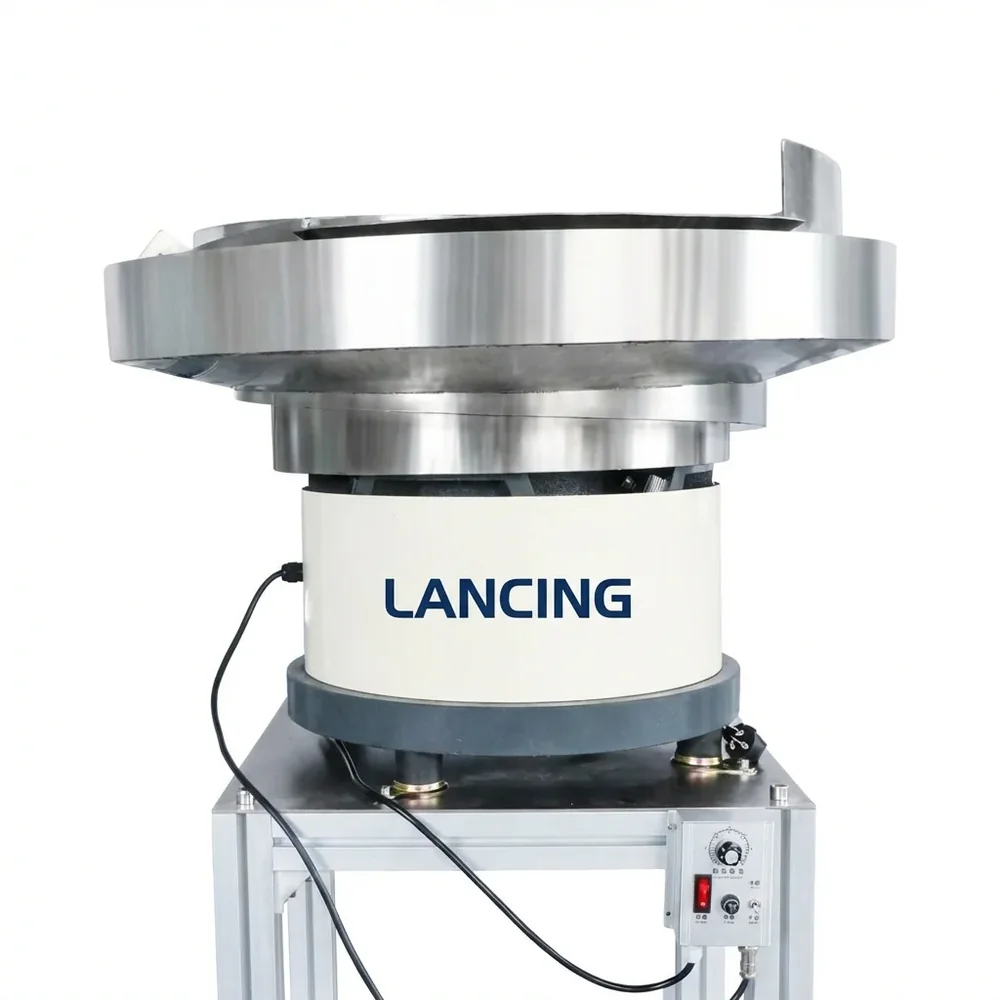
Close-up of a vibratory bowl feeder used to orient caps

Include appearance in the acceptance criteria.

Send production-finish samples and define which surfaces are customer-visible. During trials, inspect caps after the full route, including hopper loading, sorting, reject return, chute accumulation and placement. Where rejected caps are collected separately, agree who assesses and releases them.

Recirculation should not be used to conceal an unstable sorting process. If the same cap repeatedly returns, find the reason and correct the input, setting or tooling.

CallQuote